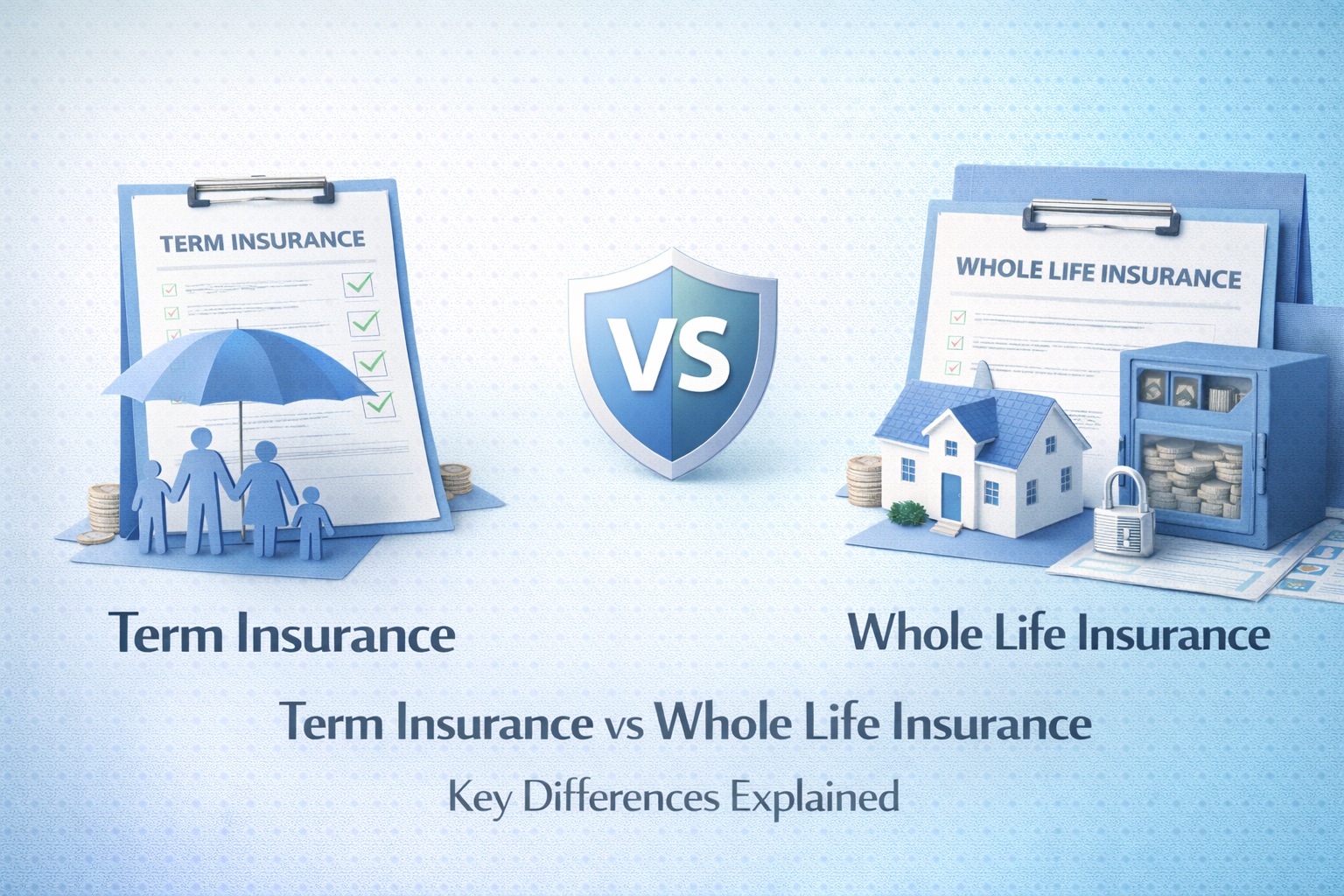
Compare term insurance vs whole life insurance in this detailed guide. Learn key differences, costs, benefits, and which policy is right for your financial goals in 2026.
Table of Contents
Choosing the right life insurance policy is one of the most important financial decisions you’ll make for your family’s future. However, many buyers struggle to understand the difference between term insurance and whole life insurance. This detailed comparison of term insurance vs whole life insurance will help you evaluate which option suits your financial goals, budget, and long-term planning needs.
In 2026, both types of policies serve different purposes, and selecting the wrong one can either leave you underinsured or paying more than necessary. Understanding term insurance vs whole life insurance ensures that you make a financially sound choice.
What is Term Insurance?
Term insurance provides life coverage for a specific period (for example, 10, 20, or 30 years). If the policyholder passes away during the term, the nominee receives the sum assured. If the policy term ends and the insured survives, there is typically no payout.
Key Characteristics:
- Pure protection plan
- Affordable premiums
- High coverage amount
- No maturity benefit (in most plans)
Term plans are designed to offer maximum financial protection at minimal cost—an essential consideration in the term insurance vs whole life insurance comparison.
What is Whole Life Insurance?
Whole life insurance provides coverage for the entire lifetime of the insured, often up to 99 or 100 years. Along with protection, it may also include a savings or investment component that builds cash value over time.
Key Characteristics:
- Lifelong coverage
- Includes savings/investment element
- Higher premiums
- Maturity or cash value benefit
This dual-purpose structure is why whole life policies differ significantly when analyzing term insurance vs whole life insurance.
Core Difference Between Term and Whole Life Insurance
| Feature | Term Insurance | Whole Life Insurance |
|---|---|---|
| Coverage Duration | Fixed term | Lifetime |
| Premium Cost | Lower | Higher |
| Purpose | Pure protection | Protection + savings |
| Maturity Benefit | Usually none | Yes |
| Investment Component | No | Yes |
| Flexibility | Simple | More complex |
This table summarizes the fundamental contrast in term insurance vs whole life insurance decision-making.
Premium Comparison: Affordability vs Long-Term Value
Term insurance is significantly more affordable because it focuses only on risk coverage.
Example:
- A young individual can get large coverage under term insurance at a relatively low premium.
- Whole life insurance costs more due to lifelong coverage and cash value accumulation.
Budget plays a major role when deciding between term insurance vs whole life insurance.
Coverage Purpose: Protection vs Wealth Component
Term Insurance is Ideal For:
✔ Income replacement for family
✔ Covering loans and liabilities
✔ Financial protection during working years
✔ Affordable high-value coverage
Whole Life Insurance is Suitable For:
✔ Long-term estate planning
✔ Wealth transfer
✔ Lifelong financial security
✔ Combining savings with insurance
Your financial objective determines which option works better in the term insurance vs whole life insurance comparison.
Cash Value Feature in Whole Life Insurance
Whole life policies may accumulate cash value that grows over time. Policyholders can sometimes:
- Borrow against the policy
- Withdraw partial value
- Use it as a long-term savings tool
This feature adds complexity and cost, making it an important distinction in understanding term insurance vs whole life insurance.
Which Policy Offers Better Financial Efficiency?
For most families, term insurance delivers higher coverage at lower cost, allowing remaining funds to be invested elsewhere. Whole life insurance, however, may suit individuals looking for stable, bundled financial products.
Efficiency depends on how you plan to use insurance—this is why evaluating term insurance vs whole life insurance carefully is essential.
Risk and Return Considerations
| Factor | Term Insurance | Whole Life Insurance |
|---|---|---|
| Financial Risk | Low | Moderate |
| Transparency | High | More complex |
| Returns | Not applicable | Limited but stable |
| Flexibility | High | Lower |
These factors highlight how financial priorities influence the term insurance vs whole life insurance decision.
Who Should Choose Term Insurance?
Term insurance is generally recommended if you:
- Want maximum coverage at affordable cost
- Have dependents relying on your income
- Need protection during working years
- Prefer separate investment planning
- Want a simple and transparent policy
For most individuals, this makes term plans a practical choice in the term insurance vs whole life insurance comparison.
Who Should Choose Whole Life Insurance?
Whole life insurance may be suitable if you:
- Want lifelong coverage regardless of age
- Need estate or legacy planning
- Prefer guaranteed savings along with protection
- Are comfortable paying higher premiums
- Seek long-term financial structuring
These needs define the niche where whole life policies fit within term insurance vs whole life insurance options.
Regulatory Protection for Policyholders
Life insurance products are regulated to ensure fair practices and transparency. You can review consumer guidelines and policyholder rights through the Insurance Regulatory and Development Authority of India (IRDAI):
Understanding these regulations helps buyers evaluate term insurance vs whole life insurance with greater confidence.
Common Mistakes Buyers Should Avoid
Many individuals purchase policies without understanding their purpose.
❌ Buying whole life insurance only because it offers returns
❌ Ignoring adequate coverage while focusing on savings
❌ Delaying insurance purchase
❌ Mixing investment goals with protection needs
❌ Not reviewing long-term affordability
Avoiding these errors ensures you choose correctly between term insurance vs whole life insurance.
Cost vs Benefit: A Strategic Perspective
A useful approach is:
- Use term insurance for financial protection
- Use investments for wealth creation
Separating these goals often results in better financial outcomes when evaluating term insurance vs whole life insurance strategies.
Final Thoughts
Both term insurance and whole life insurance serve valuable but different purposes. Term insurance provides affordable, high-value protection during critical earning years, while whole life insurance offers lifelong coverage combined with savings elements.
The right choice depends on your financial goals, responsibilities, and budget. By carefully understanding term insurance vs whole life insurance, you can select a policy that truly supports your family’s security and long-term financial planning.