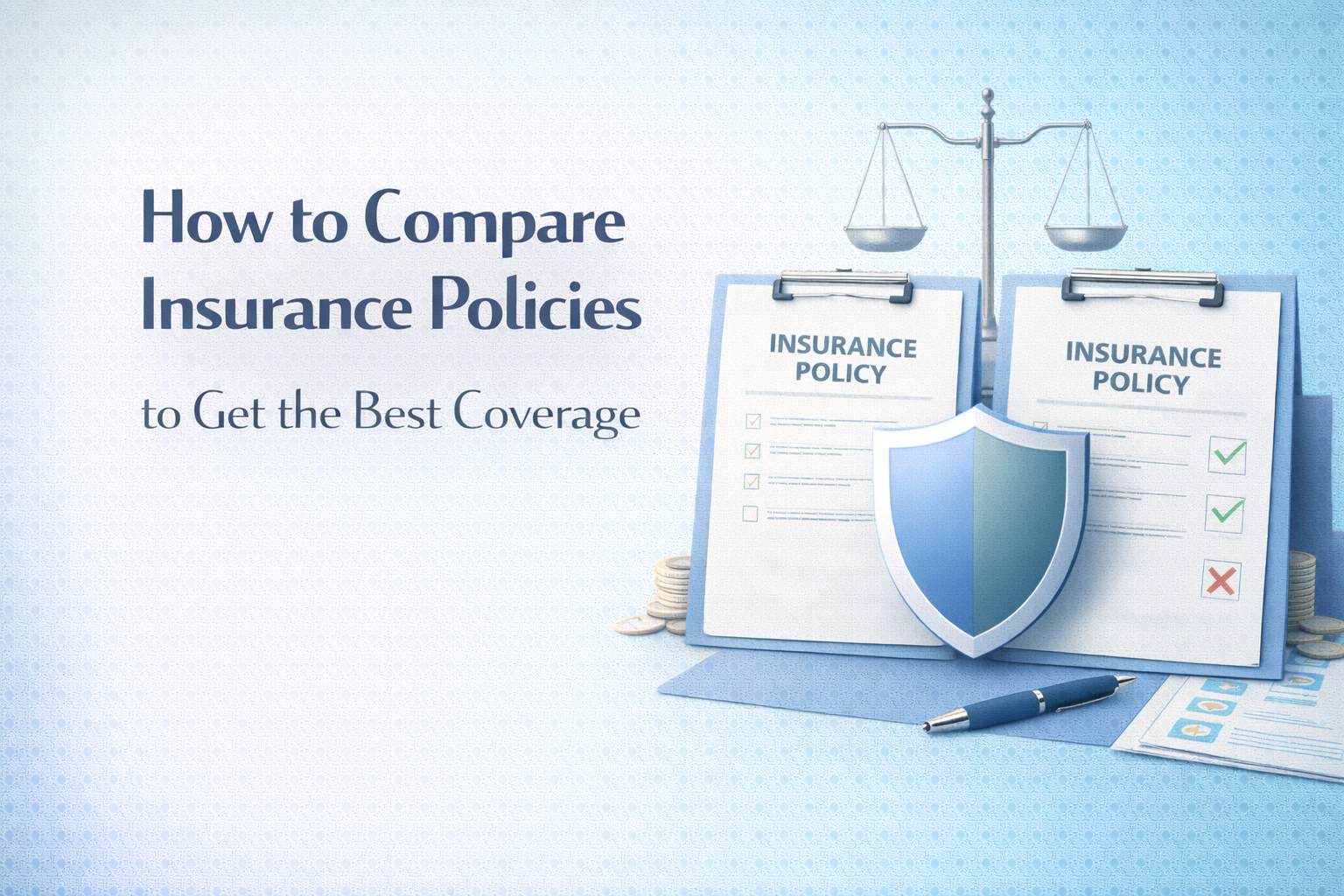
Learn how to compare insurance policies effectively to get the best coverage. Discover expert tips on evaluating premiums, benefits, claim ratios, and choosing the right plan in 2026.
Table of Contents
With so many insurance options available today, choosing the right policy can feel overwhelming. Different insurers offer varied premiums, benefits, exclusions, and claim processes, making it essential to evaluate them carefully before making a decision. Learning how to compare insurance policies helps you select coverage that provides real financial protection rather than just a low-cost plan.
In 2026, insurance comparison is not just about price—it’s about understanding value, reliability, and long-term suitability. This guide explains how to compare insurance policies effectively so you can get the best coverage for your needs.
Why Comparing Insurance Policies Is Important
Buying insurance without comparison can result in:
- Paying higher premiums than necessary
- Choosing inadequate coverage
- Facing claim difficulties later
- Missing better benefits from other insurers
Careful evaluation ensures your policy aligns with your financial goals, which is why understanding how to compare insurance policies is essential.
Step 1: Identify Your Coverage Needs First
Before comparing plans, determine what you actually need protection against.
Ask yourself:
- What risks am I trying to cover? (health, life, vehicle, property)
- Who needs to be insured?
- How much financial protection is required?
- What is my budget for premiums?
Defining needs prevents confusion and helps you compare insurance policies based on relevance rather than marketing claims.
Step 2: Compare the Sum Insured (Coverage Amount)
The sum insured is the maximum amount the insurer will pay during a claim. A lower premium with insufficient coverage can leave you underprotected.
| Policy | Premium | Sum Insured |
|---|---|---|
| Plan A | Lower | Limited coverage |
| Plan B | Slightly higher | Adequate protection |
Choosing appropriate coverage is more important than choosing the cheapest option when you compare insurance policies.
Step 3: Evaluate Premium vs Benefits
Premium should be balanced with the benefits offered. A higher premium may include better protection, fewer restrictions, and faster claims.
Look beyond price and assess:
✔ Coverage inclusions
✔ Additional riders or add-ons
✔ Claim limits and sub-limits
✔ Renewal benefits
This value-based approach is crucial when learning to compare insurance policies properly.
Step 4: Check Claim Settlement Ratio
Claim settlement ratio reflects how reliably an insurer pays claims. A higher ratio generally indicates better service and trustworthiness.
Why it matters:
- Shows insurer credibility
- Indicates likelihood of claim approval
- Reflects customer satisfaction levels
Evaluating this metric is one of the most important steps when you compare insurance policies.
Step 5: Review Policy Exclusions and Waiting Periods
Every insurance plan includes conditions and exclusions that define what is not covered.
Common exclusions may include:
❌ Pre-existing conditions (initial years)
❌ Certain treatments or damages
❌ Lifestyle-related risks
❌ Specific waiting periods
Understanding limitations ensures you don’t misunderstand coverage while you compare insurance policies.
Step 6: Examine Network Hospitals or Service Providers
For health or motor insurance, a strong network ensures easier access to services like cashless hospitalization or repair facilities.
Check:
✔ Availability of nearby hospitals or garages
✔ Quality of network partners
✔ Ease of claim processing
Service accessibility is a practical factor often overlooked when people compare insurance policies.
Step 7: Look at Add-On Covers and Flexibility
Many insurers allow customization through riders such as:
- Critical illness coverage
- Accidental protection
- Zero depreciation (motor insurance)
- Maternity benefits (health insurance)
Selecting useful add-ons can enhance protection and help you compare insurance policies based on value rather than base features alone.
Step 8: Understand Policy Renewal and Long-Term Benefits
Insurance is a long-term commitment, so evaluate renewal terms carefully.
Check:
✔ Lifetime renewability
✔ Premium increase structure
✔ No Claim Bonus benefits
✔ Continuity advantages
Long-term suitability should always be considered when you compare insurance policies.
Step 9: Research Insurer Reputation and Customer Experience
A well-known brand does not always guarantee better service. Look into:
- Customer reviews and service ratings
- Claim turnaround time
- Transparency in communication
- Support availability
Reputation analysis helps you make smarter decisions while you compare insurance policies.
Step 10: Use Official Resources for Verification
Insurance regulations ensure transparency and protect policyholders. You can review insurer guidelines, consumer rights, and policy standards through the Insurance Regulatory and Development Authority of India (IRDAI):
Checking official information helps validate your decisions as you compare insurance policies.
Common Mistakes to Avoid While Comparing
Many buyers rush comparisons and overlook critical details.
❌ Comparing only premiums, not benefits
❌ Ignoring exclusions and waiting periods
❌ Choosing policies without adequate coverage
❌ Not verifying insurer reliability
❌ Overloading with unnecessary add-ons
Avoiding these mistakes ensures you truly benefit when you compare insurance policies.
Quick Checklist to Compare Insurance Policies Effectively
Before finalizing a plan, confirm:
✔ Coverage amount suits your needs
✔ Premium is affordable long-term
✔ Claim settlement history is strong
✔ Exclusions are clearly understood
✔ Network services are accessible
✔ Add-ons match your risks
✔ Policy offers renewal flexibility
Using this checklist simplifies the process of learning how to compare insurance policies confidently.
Final Thoughts
Choosing the right insurance policy is not about finding the cheapest option—it’s about securing dependable protection that supports you during emergencies. By evaluating coverage, benefits, claim reliability, and long-term suitability, you can make informed decisions that safeguard your financial future.
Understanding how to compare insurance policies empowers you to select plans that truly deliver value, protection, and peace of mind.